
Top 10 Easy Patterns for Solving Your 3x3 Cube as a Beginner

If you just picked up a 3x3 Rubik’s Cube, you might feel overwhelmed by the many possible moves and combinations. The good news is that you don’t need to solve the entire cube right away to enjoy it. Learning simple, beginner-friendly patterns can make your practice fun and rewarding. These patterns help you understand how the cube moves and give you a sense of accomplishment as you create cool designs.
This post shares 10 easy patterns you can try on your 3x3 cube. Each pattern is straightforward, requires only a few moves, and is perfect for beginners. You’ll also find tips on how to perform them and what to expect.
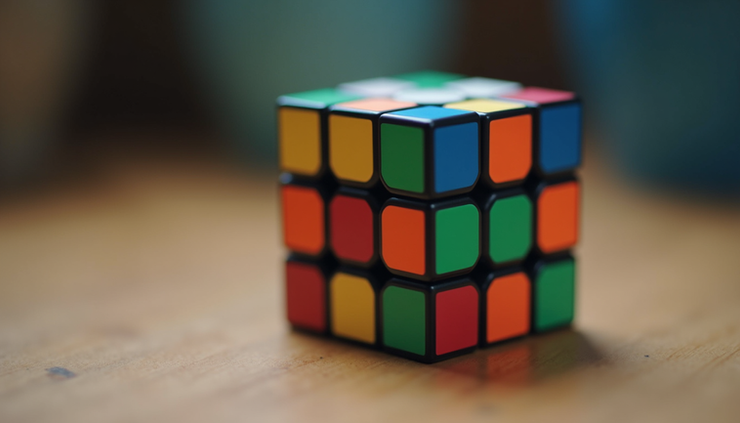
Checkerboard pattern on a 3x3 Rubik's Cube
1. Checkerboard Pattern
The checkerboard is one of the most popular beginner patterns. It looks like a classic checkerboard with alternating colors on each face.
How to do it:
Turn the middle layer horizontally twice (M2).
Turn the middle layer vertically twice (E2).
Turn the middle layer front-to-back twice (S2).
This pattern is easy to recognize and reset by repeating the moves.
2. Cube in a Cube
This pattern creates the illusion of a smaller cube inside the larger cube. It’s impressive but still manageable for beginners.
Steps to try:
Perform the following sequence:
`F L F U' R U F2 L2 U' L' B D' B' L2 U`
This sequence rearranges the colors to form the cube-in-cube effect. Practice slowly to get the moves right.
3. Cross Pattern
The cross pattern highlights a plus sign on one face of the cube, making it look neat and symmetrical.
How to create it:
Solve the white face first.
Then, rotate the edges to form a cross shape on the white face by turning the side faces.
This pattern is a good introduction to edge manipulation.
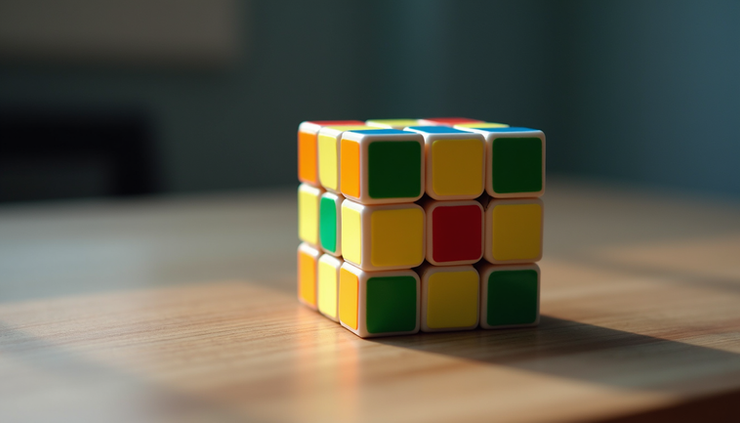
Stripes pattern on a 3x3 Rubik's Cube
4. Stripes Pattern
Stripes are simple and visually striking. You create lines of the same color running across the cube.
How to do it:
Turn the right face twice (R2).
Turn the left face twice (L2).
Turn the top face twice (U2).
Turn the bottom face twice (D2).
This pattern is easy to memorize and reset.
5. Cube with Dots
This pattern places a single center piece of a different color on each face, resembling dots.
Steps:
Turn the middle layer horizontally once (M).
Turn the middle layer vertically once (E).
Turn the middle layer front-to-back once (S).
This creates a neat dot on each face and is a fun way to explore the cube’s layers.
6. Crosses on All Faces
This pattern forms crosses on all six faces simultaneously. It looks complex but is simple once you know the moves.
How to create it:
Perform the following moves:
`M2 E2 S2`
This is a variation of the checkerboard pattern but with crosses instead.
7. Four Spots Pattern
Four spots pattern places four small squares of the same color on each face, arranged in a square shape.
How to do it:
Turn the top and bottom faces twice (U2, D2).
Turn the front and back faces twice (F2, B2).
This pattern is symmetrical and easy to recognize.

Cube in a cube pattern on a 3x3 Rubik's Cube
8. Double Cross Pattern
This pattern shows two crosses on opposite faces of the cube.
Steps:
Turn the middle layers twice (M2, E2).
Turn the front and back faces twice (F2, B2).
It’s a nice way to practice middle layer turns.
9. Six Spots Pattern
This pattern places a single colored square in the center of each face, surrounded by a different color.
How to create it:
Turn the right and left faces twice (R2, L2).
Turn the top and bottom faces twice (U2, D2).
Turn the front and back faces twice (F2, B2).
This pattern looks neat and is easy to reset.
10. Cross and Dots Combination
This pattern combines crosses and dots on different faces for a unique look.
How to do it:
Perform the checkerboard pattern first.
Then, add a dot on each face by turning the middle layers once (M, E, S).
This combination is a fun challenge for beginners.


Comments