
Why Fast Learners Usually Practice Puzzle Solving


The Secret Habit Behind High-Performing Students
Have you ever noticed that children who learn quickly often enjoy puzzles, strategy games, and brain challenges?
Whether it is a Rubik’s Cube, Chess, Tangram, Memory Games, or Logic Puzzles, these activities have one thing in common
They train the brain to think better.
At RSAI, we have worked with thousands of students and observed a clear pattern—children who regularly solve puzzles often develop stronger concentration, faster learning abilities, and better problem-solving skills.
The reason is simple:
Fast learners are not born different. They train their brains differently.
Learning Is About Patterns.
The human brain learns by recognizing patterns.
When children study mathematics, science, language, or music, they are constantly identifying and applying patterns.
Puzzle-solving strengthens this ability.
When solving a Rubik’s Cube, students learn to:
Recognize color patterns
Understand sequences
Predict outcomes
Apply logical solutions
The more children practice pattern recognition, the faster they become at learning new concepts.
Puzzles Improve Concentration
One of the biggest challenges facing children today is distraction.
Mobile phones, social media, and video games constantly compete for attention.
Puzzle-solving teaches children to focus.
Whether solving a cube, a chess position, or a Tangram shape, students must:
Observe carefully
Ignore distractions
Think deeply
Stay engaged
Over time, this improves their ability to concentrate in classrooms and during studies.
Problem Solvers Become Fast Learners.
Fast learners do not simply memorize information.
They understand how to solve problems.
Puzzles teach children to:
Analyze situations
Break large problems into smaller parts
Test different solutions
Learn from mistakes
These are the exact skills required for academic success and real-world decision-making.
A child who regularly solves puzzles becomes comfortable facing challenges instead of avoiding them.
Better Memory Through Puzzle Practice.
Memory plays an important role in learning.
Many puzzles require children to remember:
Patterns
Algorithms
Shapes
Strategies
Sequences
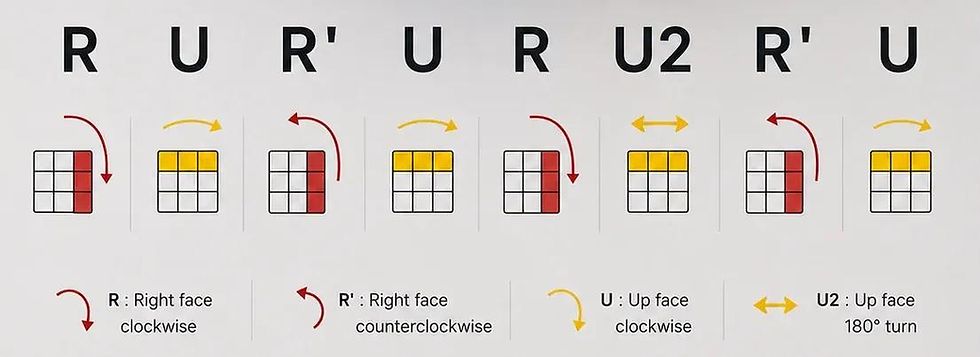
For example, Rubik’s Cube solving requires students to remember solving steps and algorithms while applying them correctly.
This strengthens both short-term and long-term memory.
As memory improves, learning becomes easier and faster.
Puzzles Build Patience and Persistence.
Fast learners are not people who never struggle.
They are people who know how to keep going.
When solving a difficult puzzle, children quickly discover:
Success takes practice
Mistakes are normal
Improvement is gradual
Persistence leads to results
This mindset helps children develop resilience and confidence.
Instead of giving up, they learn to keep trying.
Place RSAI Logo Here – Center Aligned
(Insert the RSAI logo image exactly at this point in the blog, between the sections above and below. This creates a professional visual break and reinforces the RSAI brand identity.)
Why Rubik’s Cube Is One of the Best Brain Training Tools
Among all puzzle activities, the Rubik’s Cube stands out because it combines multiple brain skills at the same time.
Students develop:
✅ Concentration
✅ Memory
✅ Logical Thinking
✅ Pattern Recognition
✅ Decision-Making
✅ Problem-Solving Ability
Every solve becomes a complete workout for the brain.
This is one reason why many top-performing students enjoy cubing.
What Parents Often Notice
Parents frequently report positive changes after their children begin puzzle-solving activities:
Better concentration during studies
Improved memory
Faster understanding of concepts
Increased confidence
Reduced screen dependency
Greater patience
These benefits often extend beyond academics and into everyday life.
The RSAI Approach
At RSAI, we use puzzle-based learning to develop strong thinkers and confident learners.
Through:
Rubik’s Cube Training
Chess Programs
Memory Techniques
Abacus Learning
Brain Development Activities
students learn not only what to think but how to think.
Our goal is to help children build skills that will serve them for life.
Final Thoughts
Fast learners are not simply gifted.
They develop habits that strengthen their brains every day.
Puzzle-solving is one of those habits.
Every puzzle teaches children to observe, think, analyze, and solve challenges independently.
That is why many successful students, innovators, and problem-solvers enjoy puzzles.
At RSAI, we believe every child can become a stronger learner.
Sometimes, all it takes is one puzzle to unlock their potential.
Because the more puzzles children solve, the better they become at solving life’s challenges.
RSAI – Intelligence Beyond Intuition
Helping children build focus, memory, confidence, and problem-solving skills through Rubik’s Cube, Chess, Abacus, Memory Training, and Brain Development Programs.


Bài của bạn viết gọn gàng, đi thẳng vào trọng tâm nên mình đọc một mạch là hiểu, cảm ơn vì đã chia sẻ. Mình thì ngày nào cũng hay xem thống kê XSMB để tiện đối chiếu, nhưng trước đây cứ phải mở nhiều chỗ khác nhau nên khá tốn thời gian. Sau đó mình thử tự tổng hợp lại cho dễ theo dõi, kiểu lưu một nơi để lúc cần chỉ vào xem nhanh, đỡ phải lục lại từng nguồn. Mình hay ghi chú và cập nhật lại trên soicau247.com để tiện xem theo ngày, nhất là khi muốn so lại kết quả cũ. Nếu bạn cũng đang cần một chỗ tham khảo nhanh thì mình để đây,…