
Top 5 Common Mistakes Beginners Make When Solving a 3x3 Cube

Solving a 3x3 cube can feel like a puzzle wrapped in a mystery for many beginners. While the goal is simple—return the cube to a uniform color on each face—the path to that solution often involves trial, error, and frustration. Many new solvers stumble over the same common mistakes that slow progress and cause confusion. Understanding these pitfalls can help you improve faster and enjoy the challenge more.

Mistake 1: Ignoring the Cube’s Structure and Mechanics
One of the biggest errors beginners make is treating the cube like a random jumble of colors rather than a mechanical puzzle with a fixed structure. The 3x3 cube has a core mechanism that holds the center pieces in place. These center pieces never move relative to each other, which means the color on each center defines the color of that face in the solved state.
Failing to recognize this leads to confusion when pieces seem to “disappear” or colors don’t line up. Instead, take time to understand that:
Centers are fixed and define face colors.
Edge pieces have two colors.
Corner pieces have three colors.
Knowing this helps you plan moves and understand why certain pieces must go in specific places.
Mistake 2: Trying to Solve Without a Method or Plan
Many beginners try to solve the cube by randomly twisting sides or following random sequences they find online without understanding the logic behind them. This approach wastes time and causes frustration.
A better way is to learn a beginner-friendly method, such as the layer-by-layer method. This method breaks the solution into manageable steps:
Solve the first layer (usually the white face).
Solve the middle layer edges.
Solve the last layer with specific algorithms.
Following a clear method gives structure to your solving process and helps you track progress.
Mistake 3: Overlooking the Importance of Algorithms
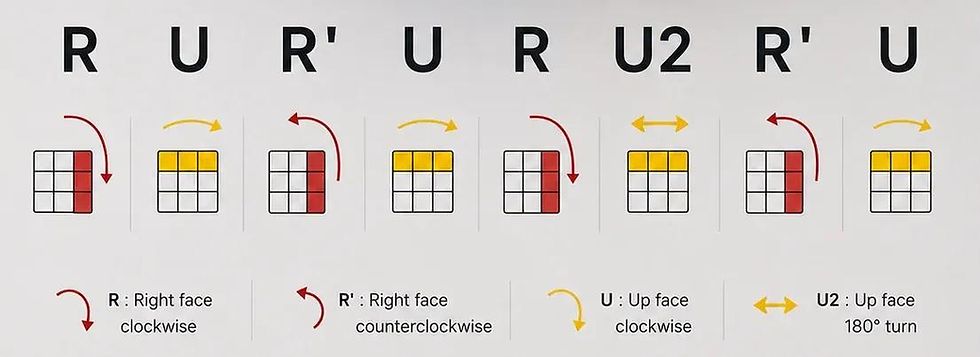
Algorithms are sequences of moves designed to reposition pieces without disrupting the rest of the cube. Beginners often avoid learning algorithms because they seem complicated or tedious. Instead, they try to solve the cube intuitively, which rarely works beyond the simplest cases.
Learning a few key algorithms is essential. For example, the right-hand algorithm (R U R' U') is a fundamental move used in many solving steps. Practice these algorithms slowly at first, focusing on finger placement and muscle memory. Over time, you will execute them quickly and confidently.
Mistake 4: Not Practicing Finger Tricks and Efficient Turning
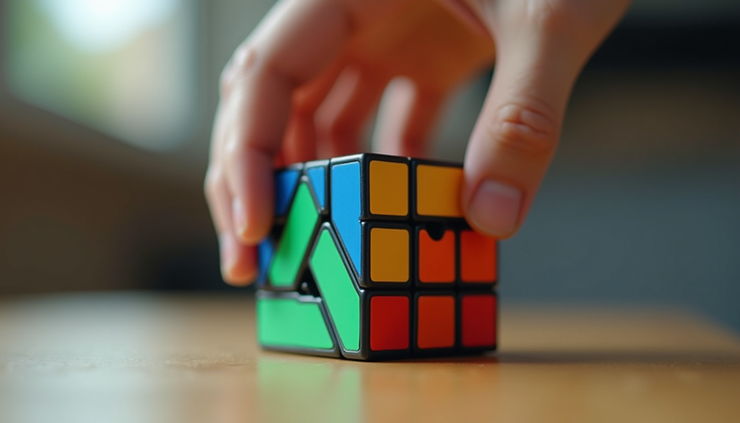
Beginners often turn the cube awkwardly, using whole hand movements or slow twists. This slows solving speed and causes fatigue. Efficient solving requires learning finger tricks—small, precise movements using fingers rather than the whole hand.
For example, instead of rotating the entire cube to reposition a face, use your index or middle finger to flick a layer quickly. This improves speed and fluidity. Watching tutorial videos or slow-motion solves can help you identify and practice these techniques.
Mistake 5: Getting Frustrated and Giving Up Too Soon
Solving a 3x3 cube is a skill that improves with practice. Many beginners get frustrated when they don’t see quick results and stop trying. This mindset blocks progress.
Instead, treat each solving attempt as a learning opportunity. Celebrate small wins like solving one layer or memorizing an algorithm. Keep a practice routine, even if it’s just 10 minutes a day. Over weeks, your solving time will drop, and the process will feel more natural.
Tips to Avoid These Mistakes
Study the cube’s structure before starting to solve.
Follow a beginner method step-by-step.
Learn and practice key algorithms regularly.
Use finger tricks to improve turning speed.
Stay patient and consistent with practice.


Comments